
Earning cash to bankroll Build and Kill Zombies cash for skills unlocks is the single biggest grind wall in the game, and most players hit it within their first ten runs. Every skill you purchase is permanent, which means a bad early spend can lock you out of the Luck 1 and Luck 2 breakpoints that multiply your future payouts. Smart grind routing turns a tight budget into a full skill tree by prioritizing the nodes that pay themselves back fastest.
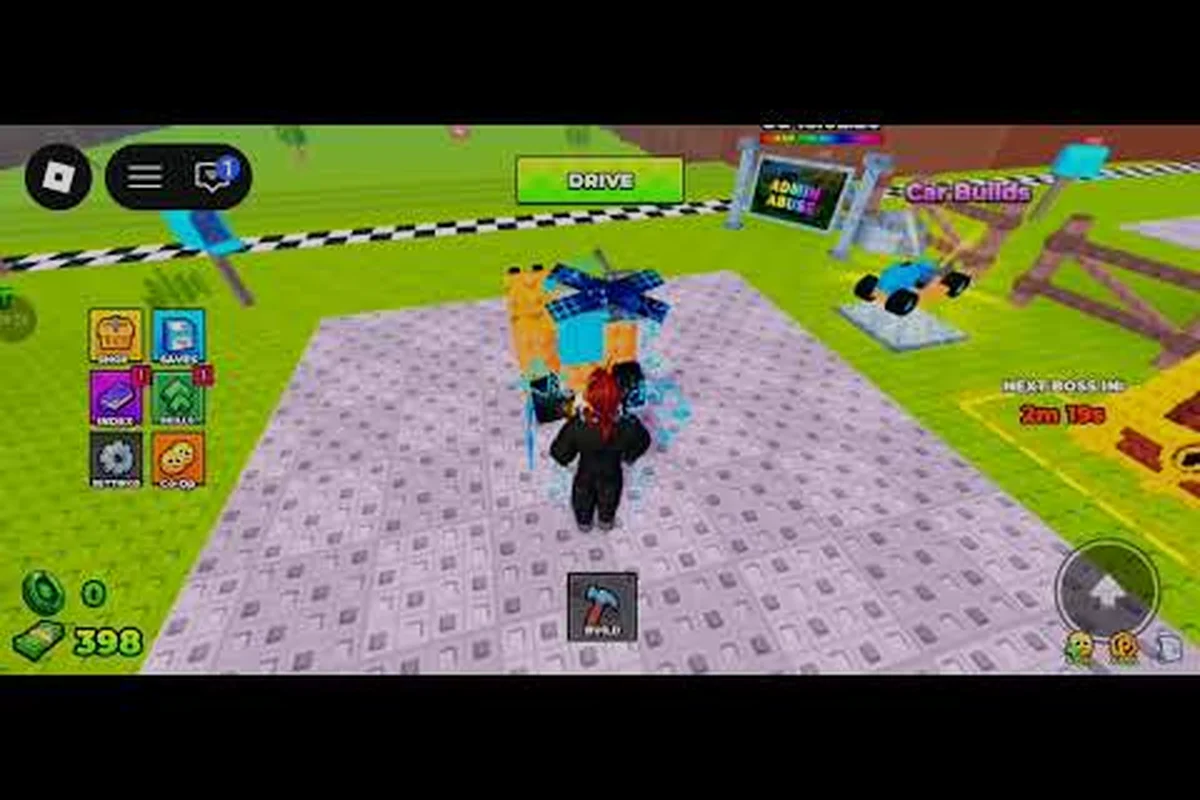
In "Build and Kill Zombies," players can spend their hard-earned cash to level up skills such as damage, fire rate, and health, with each upgrade directly boosting their combat effectiveness against increasingly tough zombie waves, as demonstrated in this gameplay walkthrough on YouTube.
Why the Skill Grind Feels Slow in Build and Kill Zombies
The skill tree in Build and Kill Zombies sits on a permanent purchase layer, separate from the per-run roll economy on the CAR PARTS and SUPPORTS machines. Cash earned during a run pays for the next node in the tree, while rolls reset every time you return to the lobby. That split is intentional, and it forces players to think about every dollar as a long-term investment rather than a single-run splurge.
How Cash and Skills Interact Across Runs
Cash drops are tied to two main activities: distance traveled along the road and zombie kills along the way. The longer you survive, the more the payout curve scales, and the more cash you bank for the next skill node. Skills themselves never expire, so each purchase is a one-time cost that boosts every future run.
| Action in Run | Cash Source | Skill Layer Affected | Repeatable? |
|---|---|---|---|
| Driving past distance markers | Distance bonus | Permanent skill tree | Yes, every run |
| Killing zombies (melee or car) | Kill bounty | Permanent skill tree | Yes, every run |
| Surviving boss waves | Bonus crate | Permanent skill tree | Yes, every run |
| Rolling car parts | No direct cash | Affects next run's payout | Yes, every run |
The catch is that early runs payout modestly, while mid-tree skills like More Support 2 and Gold Roll cost real money. Community data suggests a fresh save takes 8-12 focused runs to reach the first meaningful luck breakpoint, so pacing your grind matters more than raw playtime.
Common Cash-for-Skill Bottlenecks
Players who try to buy every node in order often stall around the luck 1 skill because the price jumps sharply from the starter tier. The skill grind rewards buying only what multiplies your next payout, which means economy nodes and survivability nodes come before cosmetic or quality-of-life upgrades. According to player reports on the official Build and Kill Zombies community, the most common bottleneck is over-investing in support pieces before unlocking the luck multiplier that makes those supports actually drop at higher tiers.
The Build and Kill Zombies Skill Tree You Are Actually Saving For
Before you map a grind route, you need to know which Build and Kill Zombies skills you are actually saving for. The skill tree has clear tiers: starter economy, mid-tier luck, advanced support unlocks, and the late-game Gold Roll capstone. Each tier feeds the next, so skipping ahead rarely pays off.
Tier 1: Starter Economy Nodes
The first two or three nodes in the tree are cheap and pay back almost immediately. Cash Boost 1 adds a flat percentage to every run's payout, and Engine Efficiency 1 lets your car travel further on a single fuel tank, which directly extends your distance-based earnings. Both nodes typically cost under 5,000 cash combined, and a single decent run clears them.
Tier 2: Luck 1 and Luck 2
This is the build and kill zombies luck 1 and build and kill zombies luck 2 tier, and it is where most grinders hit their first wall. Each luck node raises the chance of pulling rare parts and supports from the roll machines, which means every subsequent run becomes more profitable. Skipping these tiers is the single biggest mistake reported in the community, because the luck multiplier compounds across every roll for the rest of your save file.
Tier 3: The More Support Pair
Once luck is online, the More Support and More Support 2 nodes expand your car build capacity. More support slots let you mount additional weapons, which raises your kill rate and therefore your cash per minute. Players who unlock these after the luck tier notice a sharp jump in payout because the rare supports they now roll actually have places to go.
Tier 4: Gold Roll Capstone
The Gold Roll capstone sits at the end of the tree and unlocks a premium roll machine that costs more per pull but offers dramatically better odds. By the time you reach this node, your earlier cash-for-skills grind has paid for itself many times over, because every Gold Roll pull slots directly into the build you can now afford to maintain.
Mapping Your Build and Kill Zombies Skill Grind Routes
A grind route is a planned sequence of activities that maximizes cash per minute while progressing through the skill tree. The routes below are calibrated to three different player profiles: brand-new accounts, mid-progression grinders, and late-game farmers pushing toward Gold Roll.
Route A: Early-Run Payouts (0 to 10,000 Cash)
In the first few hours, focus on the shortest possible runs that still clear the early zombie waves. Your car does not need to be optimized at this stage because you are buying economy nodes, not combat nodes. Pick a flat block-heavy chassis, a basic engine, and skip supports entirely to save build time.
| Run # | Build Focus | Target Skill Node | Expected Cash Earned |
|---|---|---|---|
| 1-2 | Test chassis only | Cash Boost 1 | 1,500-2,500 |
| 3-4 | Add basic engine | Engine Efficiency 1 | 3,000-4,500 |
| 5-6 | Add one wheel upgrade | Save buffer | 4,500-6,000 |
| 7-8 | First support slot | Cash Boost 2 (if unlocked) | 6,000-8,000 |
This route is deliberately boring on purpose. Runs 1-6 in the build and kill zombies cash for skills progression exist purely to bank the 9,000-13,000 cash threshold needed to unlock the luck tier, meaning you skip Engine Efficiency 2 and any offensive perks like Reload Speed 1 entirely. Treat each sub-2-minute clear as a pure economy node: flat chassis, stock engine, no weapon wheel upgrades, exit the instant the final wave's cash orbs drop. By Run 8 that disciplined buffer alone lets you unlock luck 1 and luck 2 back-to-back without ever touching a combat skill, which is the entire point of the cash-first skill grind.
Route B: Mid-Game Money Farms (10,000 to 50,000 Cash)
Once the starter economy nodes are online, shift to longer runs that exploit the distance bonus curve. Mid-game money farms rely on a stable car build that can clear 5-7 minutes of road without breaking down. The Build and Kill Zombies grind guide on the official community covers this phase in more detail, but the core idea is simple: build a tanky car, ignore risky shortcuts, and bank the steady payout.
Players who reach this tier with luck 1 already unlocked report cash earnings roughly 30-40% higher per run compared to a fresh save. That jump is the payoff for the early grind, and it is the reason the build and kill zombies cash for skills sequence matters in the first place.
Route C: Late-Game Boss Farms (50,000+ Cash)
Late-game farming is built around the Hacker Event 2026 boss and the standard boss rotation, because boss kills drop bonus crates that scale with the skill tree's luck multiplier. A late-game build is support-heavy, fully luck-optimized, and pushes deep into the road to trigger the boss waves on purpose rather than running from them.
The skill ranking in the late game treats Gold Roll as the final unlock, and most players report needing 60-90 minutes of focused boss farming to clear that node's price tag. Once Gold Roll is online, the grind loop essentially resets to a higher tier, and you start saving for the next permanent upgrade.
Spending Luck 1 and Luck 2 Wisely
The luck nodes are the most expensive early purchases and the most impactful, so spending order matters. Buying luck 1 before any support expansion is correct because the multiplier improves every roll you do afterward, while buying support slots first leaves you with better slots but worse parts to fill them with.
Luck 1: The Multiplier Foundation
Luck 1 typically costs around 12,000-15,000 cash on a fresh save, and it raises rare drop rates by a noticeable margin across both roll machines. The payback window is short: two or three solid runs after unlocking it will out-earn what you would have made without it, because every rare part you now pull is a longer-lasting car build that travels further.
Luck 2: Compounding Returns
Luck 2 stacks on top of Luck 1 and pushes the rare-tier odds into a range where every roll feels meaningful. The community consensus is that luck 2 is the true turning point of the entire skill tree, and that reaching it should be your top priority in the first day of play. The full breakdown of how these multipliers interact with the roll machines is covered in the how luck works guide, which maps every luck node to specific drop-rate changes.
| Skill Node | Approx. Cost | Drop Rate Boost | Recommended Buy Order |
|---|---|---|---|
| Cash Boost 1 | 1,500-2,500 | N/A (payout) | 1st |
| Engine Efficiency 1 | 2,500-3,500 | N/A (range) | 2nd |
| Luck 1 | 12,000-15,000 | +15-20% rare | 3rd |
| Luck 2 | 20,000-28,000 | +25-35% rare | 4th |
| More Support | 15,000-20,000 | N/A (slots) | 5th |
| More Support 2 | 22,000-30,000 | N/A (slots) | 6th |
| Gold Roll | 40,000-55,000 | N/A (premium roll) | 7th+ |
Exact prices for nodes like Luck 2 (20,000-28,000) and More Support 2 (22,000-30,000) shift with platform and September 2026 patch versions, so always cross-check the in-game tree before committing cash, but the relative buy order from the table above is stable across community testing because the underlying drop-rate multipliers and slot-unlock thresholds haven't been rebalanced, only the numeric price labels.
How to Get Rich Faster
Once the core skill tree is unlocked, your grind shifts from "unlock nodes" to "maximize passive income." A few habits separate players who bankroll Gold Roll in a week from those who stall out at luck 2 for a month.
Stack Skills Before Each Run
Every time you return to the lobby, recheck your skill tree to confirm nothing has been reset or refunded. Skills are permanent in Build and Kill Zombies, but a misclick during a refund prompt can wipe a node you spent hours earning. The skill points overview explains how to lock in your investments safely and how the reset mechanic actually works.
Prioritize Distance Over Kills Until Mid-Game
Distance pays more than kills in the early skill tiers, because the distance bonus scales smoothly while the kill bounty plateaus. A car that drives straight for 5 minutes earns more than a car that stops to fight every wave, even though the fighting car racks up more kills. Once the kill-boosting skills unlock, the balance shifts, but during the build and kill zombies cash for skills grind, distance is king.
Use Event Windows for Bonus Cash
The Hacker Event 2026 runs as a limited window that boosts cash payouts and drops event-specific crates. Planning your grind sessions around active events is one of the fastest ways to bankroll late-tier skills, because the event multipliers stack with your luck nodes. Players who time their runs during these windows report earning Gold Roll-level cash in roughly half the usual time.
Avoid Buying Resets or Refunds
Refund tokens and skill resets exist in the game, but they are not part of an efficient grind path. Each reset burns cash you could have spent on the next permanent node, and the value of a refund is almost always lower than the value of holding the node you already bought. Treat the skill tree as a one-way ladder, and you will reach the top faster.
Tracking Skill Progression
A simple tracking habit prevents wasted cash and stalled runs. Most top grinders keep a short log of cash earned per run and the next skill node they are saving for, because the alternative is buying nodes in the wrong order and losing the luck multiplier window.
| Progress Marker | Cash Spent So Far | Skills Unlocked | Next Goal |
|---|---|---|---|
| Starter Clear | ~5,000 | Cash Boost 1, Engine Efficiency 1 | Luck 1 |
| Luck 1 Online | ~20,000 | All above + Luck 1 | Luck 2 |
| Luck 2 Online | ~48,000 | All above + Luck 2 | More Support |
| Full Support Slots | ~85,000 | All above + More Support 2 | Gold Roll |
| Gold Roll Online | ~140,000 | All above + Gold Roll | Mastery grind |
These markers are not strict thresholds, because run payouts vary, but they give you a rough pacing plan. If you are spending more than 30,000 cash without unlocking Luck 1, your build or your route needs adjustment, and the skill tree guide can help you audit your priorities.
When to Push Late-Game Content
The right time to start chasing bosses and the Hacker Event content is after luck 2 is online, because the rare drops from those encounters only become meaningful with the luck multiplier active. Pushing late-game content too early wastes the best loot on a car build that cannot use it. Once luck is stacked, the same boss drops translate directly into permanent build upgrades, which is when the late-game grind loop finally opens up.
Mistakes That Stall the Cash Grind
Most cash-for-skills slowdowns come from players optimizing the wrong axis — they chase distance bonus upgrades while ignoring the luck multiplier nodes, or they reroll parts before their luck stat has any real weight on the drop table. In Build and Kill Zombies, a 2x luck multiplier roughly doubles your common-to-rare conversion rate per chest, so locking in luck 1 and luck 2 first reshapes every other decision in the tree. The mistakes below are the most reported across community testing, and avoiding them is faster than any route optimization because it removes wasted resets and refunded nodes from your average session.
-
Buying cosmetic or flair nodes first: These have no effect on cash income, and they drain the budget you need for luck multipliers.
-
Ignoring the engine efficiency node: A car that runs out of fuel early loses distance bonus, which is the single largest cash source in early runs.
-
Rolling before luck is online: Wasting rolls on a fresh save with no luck multiplier produces common parts that break quickly, which means rebuilding more often.
-
Chasing every zombie wave: Fighting every wave looks productive but lowers your average distance per run, which lowers your cash per minute.
-
Forgetting to re-equip skills: Some players lose progress by accidentally refunding a node during inventory cleanup, so always double-check the tree after each session.
The full skill ranking and upgrade priority list lives in the skill ranking breakdown, which maps every node to a recommended buy window based on the September 2026 patch data — and it cross-references the luck 1 and luck 2 multiplier breakpoints at sessions 3, 7, and 12 where drop rates shift most sharply. If you are running a fresh save, the table flags which cash-for-skills nodes unlock behind the engine efficiency tier so you can plan refunds around the distance bonus cap rather than burning rolls on cosmetic branches.
Frequently Asked Questions
How long does the Build and Kill Zombies cash for skills grind take on a fresh save?
Most players report reaching Luck 1 within 8-12 focused runs, which takes roughly 60-90 minutes of playtime. Reaching Luck 2 and the More Support nodes typically takes another 2-3 hours of grinding, depending on roll luck and run efficiency. The full Gold Roll capstone is a longer-term goal that most players clear within a week of consistent play.
Should I buy Luck 1 or Luck 2 first in Build and Kill Zombies?
Always buy Luck 1 first, because it is cheaper and unlocks the rare-drop multiplier that makes the rest of the tree more valuable. Luck 2 is a powerful upgrade, but its effect stacks on top of Luck 1, so buying them out of order wastes the compounding benefit. The community consensus is clear: luck first, supports second, capstone last.
Do skills reset between runs in Build and Kill Zombies?
No, skills are permanent purchases that persist across every run and every login. The only way to lose a skill is to actively refund it using the in-game reset token, which is generally a bad idea during a cash grind. Treat every skill purchase as a one-way decision and your long-term progression will stay clean.
Can I earn cash without doing long runs in Build and Kill Zombies?
Yes, but the payouts are smaller. Short runs still grant distance bonuses and kill bounties, so even a 2-minute drive banks some cash, just less than a longer run would. The skill tree's economy nodes boost these small payouts, which is why buying Cash Boost 1 early makes even short sessions feel productive.
Is the Build and Kill Zombies skill grind worth doing before the Hacker Event 2026?
Absolutely. The event multipliers stack with your permanent luck nodes, so entering the event with Luck 1 and Luck 2 online is dramatically more profitable than entering with a fresh skill tree. Players who time their grind to finish the core luck tier right before an event window report the fastest cash income in the entire game, which is the entire point of the cash-for-skills grind.