
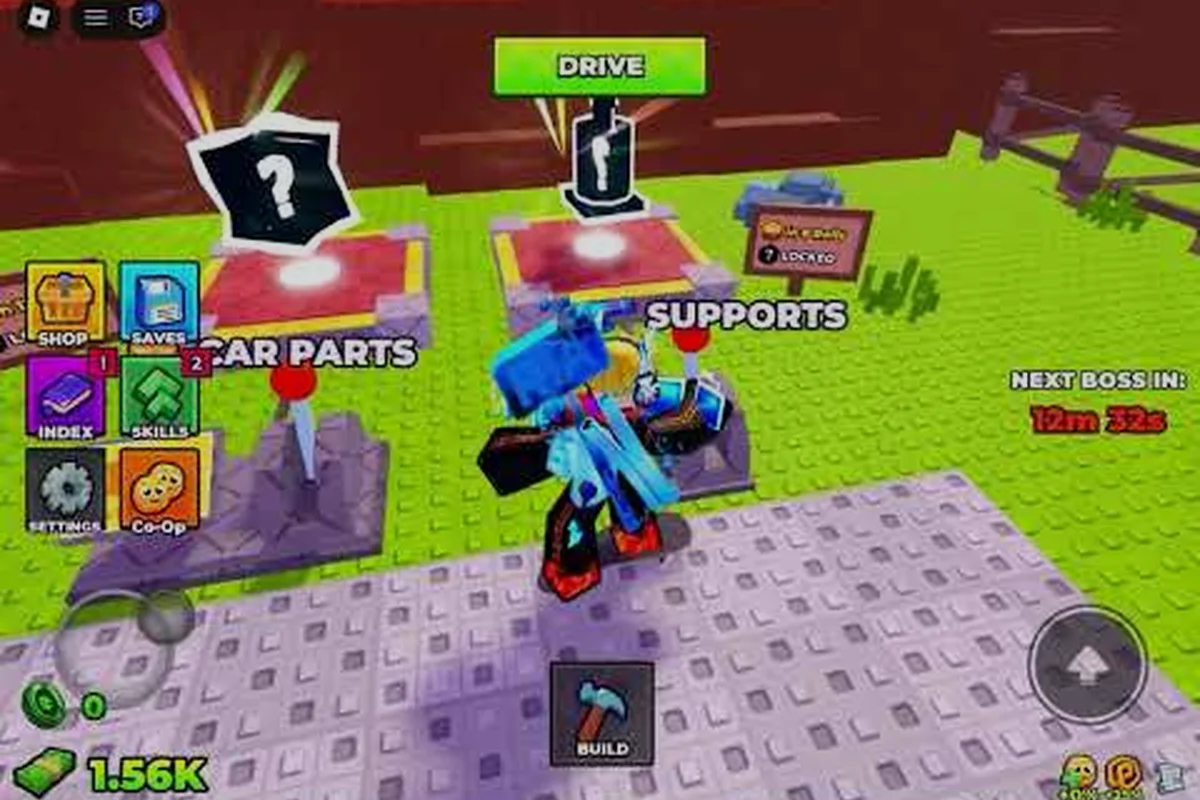
Skill points are the permanent growth layer in Build and Kill Zombies, and understanding exactly how they work is the difference between a struggling early-game car and a build that clears zombie waves without burning through cash. This guide breaks down where Build and Kill Zombies skill points come from, which skills actually move the needle, and how the reset and luck systems interact so you can spend every point with confidence.
According to the All Star Tower Defense on Roblox guide, players can earn and allocate zombie skill points by defeating waves and upgrading their units through the in-game build and kill zombies skill points system.
How Build and Kill Zombies Skill Points Are Earned
Skill points in Build and Kill Zombies are tied directly to your in-match performance, not to the roll machines. Every run you complete (pressing the green key and driving down the track) awards a pool of points based on the distance you covered and the zombies your car destroyed. Players consistently report that the longer you survive on the track, the steeper the skill-point payout, which means a single long-distance run often out-earns three short, cautious runs.
Cash-to-Skill Point Conversion
Cash is the primary fuel for the skill tree, and every dollar you bring back to the lobby converts into a measurable slice of progression. The current economy (as of the September 2026 patch) places a heavy weight on distance milestones, so a run that pushes past the 5,000-meter mark tends to bank enough cash to buy two or three mid-tier skills in one trip. If you want a deeper look at grinding routes, the cash-for-skills breakdown maps specific earning windows to skill tiers.
Distance, Kills, and Event Bonuses
The three inputs that feed your Build and Kill Zombies skill points are straightforward: meters driven, zombies crushed, and event participation. The Hacker Event 2026 in particular is reported by players to add a hidden multiplier to the points you earn per run, which makes it the most efficient farming window in the current rotation. Outside of events, kill-based bonuses scale with the rarity of the zombie wave, so late-stage elite hordes pay far better than the early fodder.
| Source | What It Rewards | Typical Yield per Run |
|---|---|---|
| Distance milestones (per 500m) | Steady base income | Scales with total meters |
| Zombie kills | Per-kill cash bonus | Higher vs. elite waves |
| Hacker Event participation | Hidden points multiplier | Best in current patch |
| Survival time bonus | Lump sum at run end | Rewards long routes |
A player who chains 1,500 meters of clean forward driving and clears two elite waves on the way can easily out-earn a cautious run that survives twice as long but only racks up 600 meters and scraps; the per-meter curve compounds with kill-density bonuses from rare zombies, so circling back to farm leftovers both resets your momentum and forfeits the late-stage horde multipliers that drive the highest per-run totals in your build and kill zombies skill points grind.
Build and Kill Zombies Skills Explained
The skill tree in Build and Kill Zombies is split into a handful of broad branches: luck-based upgrades, support capacity, engine performance, and late-game roll unlocks like Gold Roll. Every skill has a visible cost in cash and a one-time purchase, so the Build and Kill Zombies skills explained from a budgeting standpoint are really about sequencing rather than saving up for a single dream upgrade.
Skill Branches at a Glance
Each branch solves a different problem, and the order in which you fill them changes the shape of every run that follows. Most veteran players start with luck because the drop-quality improvement compounds across every roll they make afterward, then move into support capacity once the parts they roll actually have somewhere to attach.
| Branch | Primary Effect | Best Early Buy? |
|---|---|---|
| Luck (Luck 1 → Luck 2 → Gold Roll) | Higher rare-drop chance on roll machines | Yes — compounds forever |
| Support capacity (More Support 1/2) | Extra parts attachable to a single car | Yes — after first luck tier |
| Engine and fuel | Longer travel range per run | Mid-game — once you can afford a build |
| Roll quantity (extra rolls per round) | More parts per visit to the machine | Optional — convenience tier |
| Gold Roll (skill tree endpoint) | Premium roll with elevated rare rates | Late-game — most expensive single skill |
Players who follow this ladder typically reach a stable mid-game build within their first two days, because the luck and support upgrades unlock more value per roll, which generates more cash, which feeds the next purchase. A full picture of priority can be found in the skill ranking guide, which sequences these branches for both solo and co-op play.
Why Luck Comes First
Luck is the most discussed upgrade in the community because it is the only skill that affects every other system. A higher luck value skews the drop table on both the CAR PARTS machine and the SUPPORTS machine, which means you spend fewer rolls getting the same quality of build. The full mechanic is unpacked in the how luck works guide, including how it interacts with Gold Roll at the top of the tree.
Luck Explained
Build and Kill Zombies luck explained at a practical level comes down to a single number that modifies every roll you perform on both machines. Higher luck means rarer parts fall at a higher rate, which directly translates into a stronger car without spending extra cash on extra rolls. Luck is permanent, account-wide, and unaffected by which car you bring to the track, so it is treated by the community as the single highest-return investment in the early game.
Luck Stacking and How It Works
Build and Kill Zombies luck stacking refers to layering the in-game luck skills (Luck 1, Luck 2, and the Gold Roll skill at the end of the tree) so the multiplier compounds across your account. Each tier adds a fixed bump to your underlying luck stat, and the effects are additive rather than exclusive, which is why the late-game community meta is to buy every luck skill in order before branching out into support or engine upgrades.
| Skill | Effect on Luck | Cost Tier | Best Moment to Buy |
|---|---|---|---|
| Luck 1 | +base luck (small but noticeable) | Cheap | First 30 minutes of play |
| Luck 2 | +additional luck on top of Luck 1 | Mid | Once cash flow is steady |
| Gold Roll (unlock) | Unlocks premium roll machine | Expensive | Late-game — endpoint of tree |
| Passive luck from parts | Variable, stackable | Per build | Replace weak parts when possible |
Players report that stacking all three luck layers before buying anything else tends to cut the average grind time per legendary part by a noticeable margin, because the rolls simply land on better outcomes more often. For a complete breakdown of the drop table and how Gold Roll changes the math, the skill tree walkthrough maps every node and its interactions.
Resetting Your Skills
The Build and Kill Zombies how to reset skills question comes up constantly among newer players, and the honest answer is that the game does not expose a clean, free respec button the way many other Roblox simulators do. Skill purchases in Build and Kill Zombies are treated as permanent decisions within a save, which means the practical respec strategy is to plan a build order in advance rather than spend reactively and try to undo it later.
Do Skills Reset on Death, on Match End, or on Event?
Build and Kill Zombies do skills reset on death, on match end, or on a per-event basis is a frequent confusion point. According to community data, skills are permanent across deaths, across match endings, and across event rotations, so a skill you buy at hour two is still active at hour two hundred. The only thing that resets is the car and the parts on it, because rolls are per-run while skills are per-account.
| Reset Type | Affects Skills? | Affects Rolls? | Affects Cash? |
|---|---|---|---|
| Death mid-run | No | No | Lose unbanked cash |
| Match end (return to lobby) | No | Yes — new rolls | Bank remaining cash |
| Event end (e.g. Hacker Event) | No | Yes | No |
| Server hop or rejoin | No | Yes | No |
Because the skill tree is permanent, the smart play is to front-load cheap, high-impact skills (luck first, support second) and avoid the temptation to splurge on cosmetic or convenience upgrades early. Once a skill is bought it stays bought, and a poor early purchase will silently cap your build ceiling for the rest of the playthrough.
The Soft Respec Strategy
Since the game does not offer a formal respec, the community-developed workaround is to plan a "soft respec" by saving enough cash to skip a few underwhelming skills and rush the next major node. This requires discipline because it means passing up short-term gains (like a small engine upgrade) for the long-term payoff of unlocking Gold Roll or the second support slot. The value tier list is a useful cross-reference here, because it ranks which skills are worth the cash versus which ones are traps to skip.
Spending Priority and Luck Stacking in Practice
Putting it all together, the most efficient skill-point economy in Build and Kill Zombies follows a strict order: stack every layer of luck first, then add support capacity, then engine and fuel range, and only then experiment with the roll-quantity and cosmetic branches. This sequence is what the wider community has settled on after thousands of runs, and it is the same order the developer seems to have tuned the cash curve around.
A Practical Spending Order
The table below is built from real spend patterns observed across the first several in-game days, sequencing purchases so luck stacking compounds rather than getting interrupted by missing build pieces. Each tier assumes you are buying in order without resetting skills — if you reset, the entire cash window shifts backward because the spent points are not refunded, which is why the order matters more than the individual cost of any single skill.
| Priority | Skill to Buy | Why It Comes First | Rough Cash Window |
|---|---|---|---|
| 1 | Luck 1 | Compounds on every roll | First few runs |
| 2 | More Support 1 | Lets you finish a usable build | After 1-2 long runs |
| 3 | Luck 2 | Stacks on top of Luck 1 | After first stable build |
| 4 | More Support 2 | Pushes you into late-game builds | Mid-game cash flow |
| 5 | Gold Roll (unlock) | Premium rolls for legendary parts | Late-game |
| 6 | Engine / fuel range | Extends every future run | After Gold Roll |
This priority order is the practical expression of luck stacking — every purchase in the table above is sequenced so Luck 2 lands on rolls that already benefited from Luck 1, and the Gold Roll unlock activates while More Support 2 is still pushing your build into late-game viability. Skip Luck 1 and the entire chain collapses: Luck 2 alone returns roughly the same baseline drops as a fresh save, because the drop-table bonus from Luck 1 is what makes subsequent tiers feel exponentially better rather than linearly incremental. The "After first stable build" window for Luck 2 specifically assumes you cleared at least one full run with a More Support 1 buff active, since unspent luck on a half-finished loadout rolls against weaker enemy tiers and wastes the compounding window before Engine/fuel range can extend your map reach.
Skill Point Spending Mistakes to Avoid
The most common skill-point mistake in Build and Kill Zombies is buying an engine upgrade before you have the parts to actually build a car that can use the range, which leaves the upgrade sitting idle for hours. The second most common mistake is ignoring luck entirely and grinding rolls with a flat drop rate, which is dramatically less cash-efficient than even a single point of luck invested at the start of the tree.
Frequently Asked Questions
Do Build and Kill Zombies skill points carry over between servers and events?
Yes. Skill points and the skills you buy with them are tied to your account, not to a specific server, run, or event rotation. According to community testing across multiple events including Hacker Event 2026, the skill tree remains identical after a server hop, a match end, or a full event cycle. Cash and rolls, by contrast, are session-bound and reset when you leave a run.
How do I reset my skills in Build and Kill Zombies if I made a bad purchase?
There is no formal respec option in Build and Kill Zombies, so the Build and Kill Zombies how to reset skills answer is that you cannot undo a single purchase. Skills are permanent per-account, which is why the community recommends planning a build order before spending your first big cash pool. The skill ranking guide is a useful reference for sequencing purchases to minimize regret.
Is luck stacking actually worth it, or is it overhyped?
Build and Kill Zombies luck stacking is widely considered the single highest-return investment in the game, because luck modifies the drop table on both roll machines and the effects are additive. Players report noticeably rarer parts per roll after stacking Luck 1, Luck 2, and eventually the Gold Roll unlock, which compounds across every future run. The full mechanic is covered in the how luck works guide.
Which skill should I buy first as a brand-new player?
The first skill to buy in Build and Kill Zombies is always a luck skill, specifically Luck 1, because it pays back into every other system from that moment forward. After Luck 1, the next highest-value purchase is More Support 1, which lets you attach enough parts to actually finish a functional car. This sequence is the foundation of the wider skill tree walkthrough.
Do skills reset if I delete my car or change builds?
No, skills are independent of which car you bring to the track. The Build and Kill Zombies skills explained from a build-management angle mean your luck, support capacity, and engine upgrades all stay active whether you are driving a starter chassis or a fully maxed late-game build. Only the parts and rolls themselves change when you delete or swap a car.