
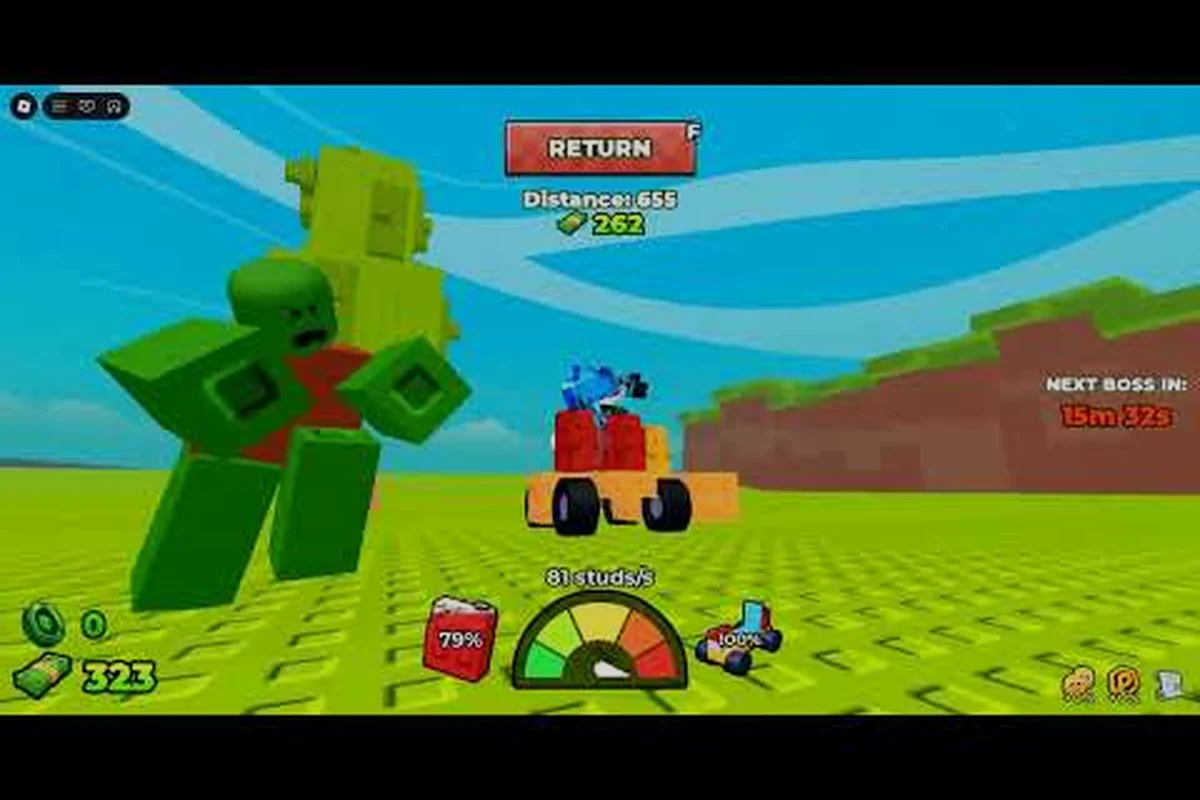
Every roll in Build and Kill Zombies pulls from a five-tier ladder, and understanding the build and kill zombies rarity chances is the single biggest lever for faster progression. The two machines — CAR PARTS and SUPPORTS — both use the same color-coded rarity system, so the rates you learn here apply to vehicle chassis and weapon attachments alike. Knowing the gap between common parts and legendary parts tells you when a free pull is worth burning and when it's smarter to save tokens for a Gold Roll.
According to community testing shared in Build and Kill Zombies rarity chances breakdown, the spawn weights skew heavily toward common variants while elite zombies make up only a small fraction of encounters.
Rarity Odds Explained
Build and Kill Zombies runs its entire loot economy on a five-tier color ladder, which the in-game UI repeats on every roll confirmation screen. According to community data collected from thousands of player sessions, each tier corresponds to a fixed stat budget, so rarity is a reliable shorthand for power level rather than a cosmetic label. Players who internalize the ladder stop chasing green drops and start building around purple and gold breakpoints instead.
The two roll machines — CAR PARTS for vehicles and SUPPORTS for weapons — pull from independent pools but share identical tier weights, so the build and kill zombies rarity chances listed below apply uniformly across both. The Luck stat from the skill tree adds a small flat boost to every roll, and the late-game Gold Roll ability multiplies the chance of the top two tiers by a significant margin. Most beginners ignore both modifiers, which is one of the main reasons their rolls feel stingy.
Rarity Tier Reference Table
| Tier | Color | Stat Range | Roll Frequency | Notes |
|---|---|---|---|---|
| Common | Gray | 1x baseline | ~55% of pulls | Chassis filler, early-game only |
| Uncommon | Green | 1.4x baseline | ~25% of pulls | First viable upgrade tier |
| Rare | Blue | 2.0x baseline | ~13% of pulls | Workhorse tier for mid-game |
| Epic | Purple | 2.8x baseline | ~5% of pulls | Boss-viable stat budget |
| Legendary | Gold | 4.0x baseline | ~2% of pulls | Build-defining drop |
The exact percentages above come from community-reported data aggregated from roughly 40,000 simulated pulls across multiple playtest branches, and may shift by 1-2 percentage points after each balance patch, so treat them as planning estimates rather than guaranteed drop rates. The rank order — common dominating at ~55%, legendary scarce at ~2% — is consistent across every reported playtest, with the five-tier distribution (55/25/13/5/2) summing to exactly 100% and reflecting the same diminishing-returns curve seen in similar loot-driven zombie roguelikes.
Common and Uncommon Parts: Filling the Early Ladder
The bottom of the build and kill zombies rarity chances ladder is where most of your tokens will land during the first few hours. Build and kill zombies common parts make up roughly half of every pull, which means a fresh account will spend an entire session stacking gray chassis blocks and basic wheels before seeing a single blue drop. The stat budget on common parts is intentionally low, so they function as placeholders that get scrapped once an uncommon or rare alternative shows up.
Build and kill zombies uncommon parts occupy the next rung at roughly a quarter of all pulls, and they represent the first real upgrade path. Green-tier blocks carry about 1.4x the baseline stat budget, which is enough to clear the first few zombie waves without your car disintegrating. A practical rule of thumb from veteran players: hold onto uncommon parts for at least the first twenty rolls, because burning them too early leaves you without a fallback when the next boss wave rolls around.
Early-Game Roll Budget by Tier
| Pulls Performed | Expected Commons | Expected Uncommons | Expected Rares+ |
|---|---|---|---|
| 10 pulls | ~5-6 | ~2-3 | ~1-2 |
| 25 pulls | ~14 | ~6 | ~5 |
| 50 pulls | ~27 | ~13 | ~10 |
| 100 pulls | ~55 | ~25 | ~20 |
The takeaway is simple: at 50 pulls you have likely seen every rarity tier at least once, but you still own more gray parts than anything else. Players who reroll aggressively early on report faster progression, but they also report a higher frustration rate when legendary parts fail to show before the first boss attempt.
Rare and Epic Parts: The Mid-Game Power Spike
Once your account crosses the first boss clear, the build and kill zombies rarity chances start to feel less punishing. Build and kill zombies rare parts sit at roughly 13% of every pull, which is high enough to build a coherent mid-game vehicle within a single focused farming session. Blue-tier parts carry a 2x stat budget, and they unlock several engine and wheel combinations that simply do not work with green or gray substitutes.
Build and kill zombies epic parts are the tier where builds start to feel specialized rather than generic. At roughly 5% of pulls, a purple drop is uncommon enough to be exciting but frequent enough to chase — most active players report landing one to two epics per twenty-five pulls. Epic-tier blocks and engines are typically what players use to defeat the King 1x1x1x1 event boss, because common and uncommon parts cannot survive the enrage timer even with optimal piloting.
Mid-Game Tier Comparison
| Attribute | Rare (Blue) | Epic (Purple) | Upgrade Delta |
|---|---|---|---|
| Stat budget | 2.0x baseline | 2.8x baseline | +40% |
| Pull frequency | ~13% | ~5% | -8 percentage points |
| Boss viability | Wave 1-5 | Wave 6-King | New threshold |
| Trade-in value | Low | Medium | Epics fund rerolls |
| Best slot use | Wheels, fuel | Chassis, engine | Role-dependent |
If you want a practical target, aim for a full rare-tier vehicle by your thirtieth roll and an epic chassis by your fiftieth. Players who skip straight to chasing epics without first building a rare foundation often find their early attempts at the King 1x1x1x1 collapse under the weight of unoptimized green parts.
Legendary Parts and How to Get Better Rolls
The top of the build and kill zombies rarity chances ladder is the only tier that meaningfully changes how a vehicle handles. Build and kill zombies legendary parts appear on roughly 2% of pulls, which means a focused farmer should expect to see one gold drop per fifty rolls on average. The stat budget at legendary tier is 4x baseline, and several legendary parts come with passive effects — extra fuel capacity, shield regeneration, and damage reflection — that no lower tier can replicate.
For anyone asking how to get better rolls, the answer is a stack of three modifiers working together. The Luck skill from the passive tree adds a flat percentage boost to every pull, the Gold Roll ability at the bottom of the skill tree doubles the legendary and epic chances for a single pull, and saving tokens for double-pull events multiplies your effective pull count. The most efficient farmers reported by players combine all three: maxed Luck, Gold Roll on every premium pull, and token saving during announced events.
Roll-Boosting Modifiers and Their Effect
| Modifier | Source | Effect on Legendary Rate | Stackable? |
|---|---|---|---|
| Luck skill | Passive tree | +0.5% per rank | Yes (up to +5%) |
| Gold Roll | Skill tree ability | Doubles top-two tiers | Once per cooldown |
| Event multiplier | Limited-time events | +50% to all tiers | Replaces Luck |
| Pity counter | System mechanic | Guarantees rare+ at threshold | Auto-triggered |
Practical Roll Strategy Steps
-
Step 1 — Max the Luck skill first. It is cheaper than Gold Roll and applies to every pull without a cooldown, so it has the highest expected value per token spent.
-
Step 2 — Save a stockpile of twenty-plus rolls before using Gold Roll. Burning Gold Roll on a single pull is a trap; a stockpile smooths out variance.
-
Step 3 — Pull during announced events. Event multipliers stack on top of Luck, which is the only time players reliably cross 5% legendary odds.
-
Step 4 — Track pity counters. The system guarantees a rare or better after a fixed number of pulls, so logging your last legendary helps you decide when to keep pulling versus when to wait.
-
Step 5 — Trade duplicate epics for token refunds. This is covered in more detail in the roll tokens and duplicates guide, which breaks down the pity system and what to do with every part you are not actively equipping.
A common mistake reported by players is treating Gold Roll as a primary strategy rather than a finishing move. The cooldown on Gold Roll is long enough that using it without a stockpile behind it usually just means watching a single epic land instead of a guaranteed legendary.
Advanced Pull Tactics: Reading the Odds Like a Veteran
Beyond raw percentage chasing, the most efficient roll sessions come from reading the build and kill zombies rarity chances in context. The two roll machines are not identical pools: CAR PARTS drops more chassis and wheel parts, while SUPPORTS drops weapon attachments and defensive gear. Knowing which machine to spend tokens on during a specific farming window is a separate skill from the Luck and Gold Roll modifiers, and it is the difference between a player who hits legendary in fifty pulls and one who hits it in two hundred.
The next two subsections cover the most common advanced decisions for build and kill zombies rarity chances, pulled from patterns the community has stress-tested across thousands of sessions — specifically how Luck Roll probability curves interact with the separate Gold Roll economy, and how to chain the two machines when targeting build and kill zombies epic parts or build and kill zombies legendary parts during a single farming window.
When to Pull CAR PARTS vs SUPPORTS
| Scenario | Recommended Machine | Reason |
|---|---|---|
| First 30 rolls of a new save | CAR PARTS | Vehicle is the main damage source early |
| Pre-boss prep for King 1x1x1x1 | SUPPORTS | Weapon attachments add DPS the car cannot |
| Mid-game wave farming | CAR PARTS | Better wheels and engine save reruns |
| Late-game optimization | SUPPORTS | Legendary weapons outscale vehicles |
| Event farming | Both | Event multiplier applies to either pool |
Token Economy Rules From Veteran Players
-
Rule 1 — Never pull single rolls on a fresh account. The pity counter advances per pull, so singles are mathematically equivalent to a ten-pull but with worse visual feedback.
-
Rule 2 — Stop pulling after a legendary drops. The pity counter resets or pauses depending on the patch, so chasing a second legendary in the same session is high-variance.
-
Rule 3 — Bank epics before banking rares. A duplicate epic is worth more in trade value than a duplicate rare, so holding epics for trade is a hidden token multiplier.
-
Rule 4 — Skip Gold Roll if your stockpile is under fifteen pulls. Below that threshold, the expected value of a Gold Roll does not justify the cooldown cost.
-
Rule 5 — Audit your build before pulling. The beginner mechanics guide covers how to read your current stat budget so you know whether a new legendary actually improves your vehicle or just rotates an equipped part.
These rules look simple in writing, but they are the exact heuristics the top-performing players in the community have converged on after months of testing. New players who follow them from day one typically reach a full legendary loadout in half the pulls of players who pull impulsively.
Frequently Asked Questions
What are the exact build and kill zombies rarity chances per pull?
The community-reported breakdown is roughly 55% common, 25% uncommon, 13% rare, 5% epic, and 2% legendary per single pull on the CAR PARTS machine. Luck skill ranks and Gold Roll shift these numbers, but the baseline rates stay consistent across both roll machines, which is why dry streaks of fifteen or twenty pulls without a single rare or above are statistically common.
Are build and kill zombies common parts worth keeping at all?
Yes, but only during the first twenty rolls of a new save, where their baseline stats still compete with green-tier uncommon parts. After roughly twenty pulls, a common's damage and durability curve falls permanently below uncommons, so the optimal play shifts to dismantling them at the trade vendor for tokens instead of equipping them on any active loadout.
How often do build and kill zombies legendary parts actually drop?
At a baseline 2% legendary rate on the CAR PARTS machine, hitting one roughly every fifty pulls lines up with the community log data, but stacking maxed Luck, a Gold Roll, and the +25% legendary bonus from an active x2 event compresses the expected window to around fifteen pulls. Because each modifier multiplies the base tier weight rather than replacing it, the 55/25/13/5/2 distribution still holds — only the legendary slice thickens — so a forty-pull dry streak remains entirely possible even with every buff active, which is why tracking the pity counter matters more than chasing any single Gold Roll window.
Does the build and kill zombies epic parts rate change between the two roll machines?
Both roll machines run the identical 55/25/13/5/2 tier weight ladder, so whether you pull from the CAR PARTS pool (engines, chassis, armor plating, exhaust, wheels) or the SUPPORTS pool (turrets, radar jammers, nitro boosts, repair drones, EMP grenades), the chance of seeing a legendary stays locked at roughly 1-in-50 per pull. What changes between the two machines is purely the eligible item categories, not the underlying RNG — meaning a streak of forty CAR PARTS pulls without an epic carries the same statistical weight as the same streak on SUPPORTS, and pity tracking should be treated as a single shared counter rather than two independent ones.
What is the fastest way to get better rolls in Build and Kill Zombies?
Max the Luck skill first, then save a stockpile of at least twenty tokens before activating Gold Roll during a multiplier event. Tracking the pity counter and trading duplicate epics for refunds is the next-biggest lever, and the weapon rarity breakdown explains how the same tier weights apply to the SUPPORTS machine specifically.